Ask Justine: Clarity. Strategy. Results.
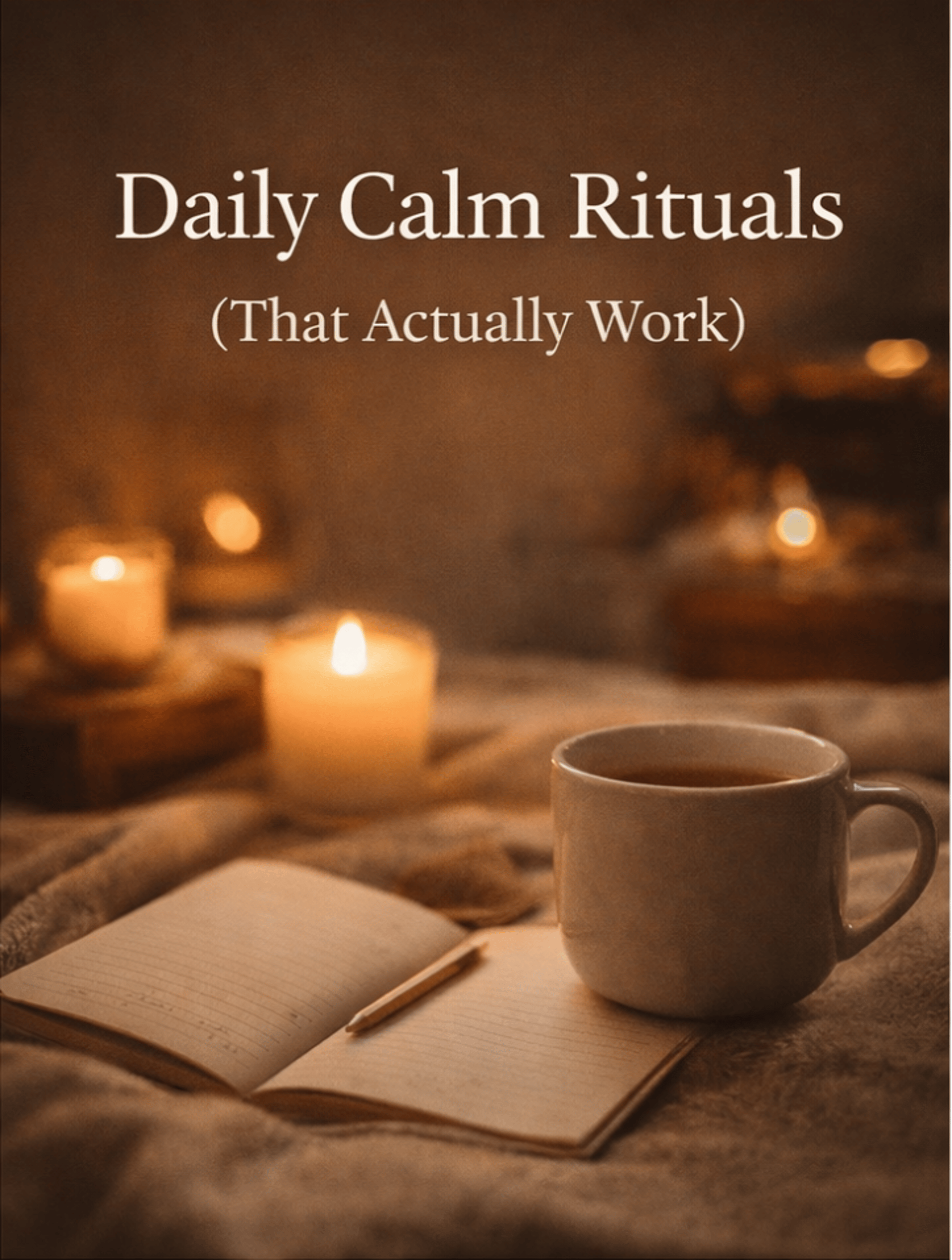
Daily Calm Rituals (That Actually Work)
Discover daily calm rituals built around nervous system regulation habits and realistic routines for anxiety—simple practices your body can actually sustain.
Justine Sinclair
12/18/20252 min read
If your “calm routine” feels like another job you’re failing at—you’re not lazy.
You’re human.
Most routines weren’t designed for a nervous system that’s already overwhelmed.
They were designed for discipline, aesthetics, and productivity—not safety.
Calm doesn’t come from doing more.
It comes from doing what your body can actually tolerate.
Why Most Calm Routines Fail (Science, Simplified)
Here’s what research consistently shows:
🔹 The nervous system calms through predictability, not perfection
🔹 Short, repeated cues of safety work better than long routines
🔹 The brain learns calm through association, not force
Studies in behavioral psychology and neuroscience show that micro-habits are more sustainable because they:
Reduce cognitive load
Avoid triggering threat responses
Build trust between mind and body
Translation?
Your body doesn’t want a “perfect morning.”
It wants signals of safety that it can recognize daily.
Calm is a nervous system skill.
It is not a personality trait.
Some people look “naturally calm” because:
Their routines are simpler
Their environments are softer
Their expectations are lower
Their bodies feel safer
Calm is learned through repetition of safety, not motivation.
That’s why rituals matter—but only if they’re realistic.
5 Daily Calm Rituals That Actually Work
(Backed by psychology & nervous system science)
1️⃣ The 60-Second Arrival Ritual (Morning or Anytime)
What it is:
Before checking your phone, pause for one minute.
Sit or stand still
Take one slow breath
Let your eyes rest on something neutral (light, wall, plant)
Why it works:
Research on attentional grounding shows that orienting to your environment reduces threat scanning in the brain.
You’re telling your nervous system:
“I’ve arrived. I’m here. I’m safe.”
No journaling. No affirmations. Just arrived.
2️⃣ Pair Calm With Something You Already Do
Don’t add habits.
Attach calm to habits you already have.
Examples:
Coffee: one deep breath before the first sip.
Shower: → warm water on shoulders for 10 seconds.
Bedtime: dim the lights before lying down
Why it works:
Habit-stacking research shows the brain learns faster when calm is paired with an existing behavior.
Your body remembers:
“This moment equals safety.”
3️⃣ The “Lower the Volume” Evening Ritual
Instead of a strict bedtime routine, try this:
Lower lights 30–60 minutes before sleep
Reduce screen brightness
Choose one soft sensory cue (scent, blanket, music)
Why it works:
Studies on circadian rhythm and sensory input show that light and sensory softness directly signal the nervous system to downshift.
You’re not forcing sleep.
You’re inviting it.
4️⃣ Emotional Check-In (Not Emotional Control)
Once a day, ask yourself:
“What am I feeling right now—without fixing it?”
No judgment.
No solutions.
Why it works:
Emotional awareness research shows that naming emotions reduces amygdala activation
(the brain’s alarm system).
Understanding calms faster than suppression.
This is the foundation of emotional regulation.
5️⃣ One Predictable Calm Anchor
Choose one tiny ritual you repeat daily:
Same tea
Same chair
Same song
Same candle
Same breathing pattern
Why it works:
The nervous system loves predictable anchors. They become safety cues over time.
Consistency is greater than intensity.
Why Calm Rituals Should Feel Almost “Too Easy”
If a ritual feels:
❌ Hard
❌ Time-consuming
❌ Pressure-filled
❌ Easy to skip
Your nervous system won’t trust it.
The most effective rituals feel:
✅ Gentle
✅ Repeatable
✅ Forgiving
✅ Neutral
Calm grows through trust, not effort.
Where MoodWiser Fits In
MoodWiser isn’t here to tell you what to do.
It helps you:
Notice which rituals actually calm you
Track emotional patterns
Build awareness instead of pressure
Create safety through understanding
Calm isn’t one routine.
It’s a relationship with your nervous system.
Final Thought
You don’t need a perfect routine.
You need:
Fewer expectations
More awareness
Softer signals of safety
Calm isn’t something you achieve.
It’s something your body allows—when it feels understood.
🤍 Ready to build calm and keep your nervous system calm?
Download MoodWiser and start tracking what actually works for you—gently, daily, without pressure.