Ask Justine: Clarity. Strategy. Results.
Gen Z Guide to Understanding Anxiety Responses
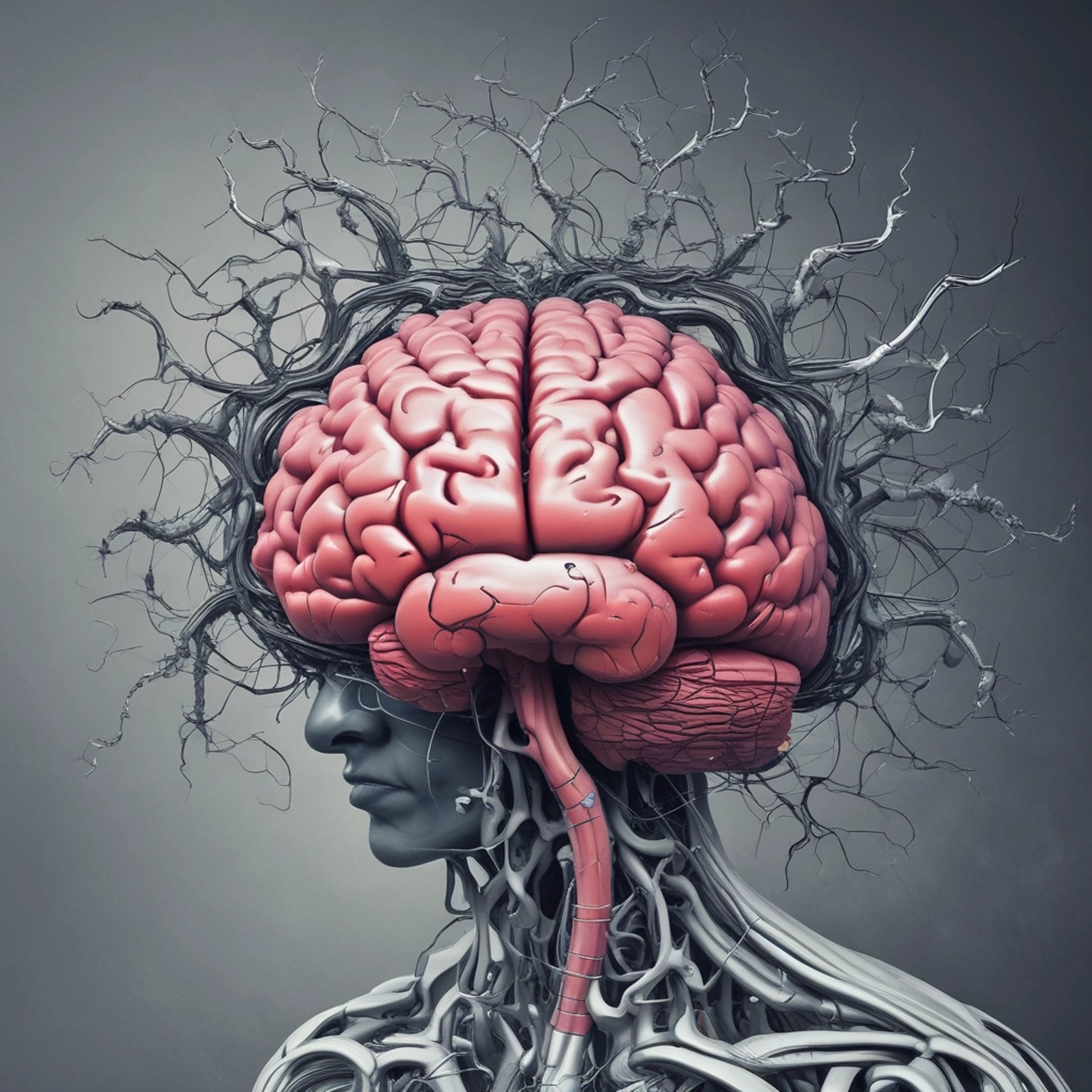
This Gen Z guide explains why anxiety feels like an emergency, how the fight-or-flight response anxiety loop triggers emotional spirals, and how to calm your nervous system stress response—without pretending everything is fine.
Justine Sinclair
12/2/20253 min read
Why Your Brain Thinks Everything Is an Emergency—When It's Not
A Gen Z guide to fight-or-flight, emotional spiraling, and how to calm your nervous system without pretending you’re a monk.
Introduction: Your Brain Isn’t Being Dramatic
— It’s Trying to Protect You
If you’ve ever felt your heart race because someone took too long to text back, or you panicked over a tiny mistake at work, or your brain whispered “everything is falling apart” over the smallest thing…
You’re not weak.
You’re not unstable.
You’re not “too emotional.”
You’re experiencing something ancient, biological, and totally normal:
👉 Your fight-or-flight system is overreacting to modern stress.
Your brain was designed for tigers—not unread messages, deadlines, or social pressure.
The Science: Your Brain Has One Job—Keep You Alive
Inside your brain sits a small almond-shaped structure called the amygdala.
Its job is simple: detect danger.
But here’s the catch:
The amygdala cannot tell the difference between:
A real physical threat
vs.A social or emotional stressor
To the brain:
❗ A tiger is charging at you.
❗ A text that says, “We need to talk.”
❗ A boss using “…” in an email
❗ Someone’s tone is sounding off
…all produce the same survival reaction.
This is why your heart pounds, your stomach flips, or your chest tightens even when “nothing is going wrong.”
⚠️ Why Gen Z Feels This Even More
Research shows Gen Z experiences higher baseline anxiety due to:
1. Digital overstimulation
Constant notifications = constant micro-threat scanning.
2. Social comparison
Your brain wasn’t meant to compare your life to 10,000 others every day.
3. Economic pressure
Trying to “stay afloat” hijacks your survival systems.
4. Emotional awareness
Gen Z FEELS deeply—which is a trength, not a weakness.
5. Chronic uncertainty
The world moves fast.
Your amygdala reacts faster.
Your nervous system is working overtime—not because you’re fragile, but because your environment is loud.
Fight, Flight, Freeze, or Fawn—Which One Are You?
When your brain senses danger (real or imaginary), it activates one of these:
Fight
You get irritated fast. You argue or defend yourself.
Flight
You avoid things, procrastinate, or distract yourself.
Freeze
You shut down. You feel stuck, numb, or overwhelmed.
Fawn
You people-please to avoid conflict.
Most Gen Z deal with freeze and flight—the “overthinking and avoidance” combo.
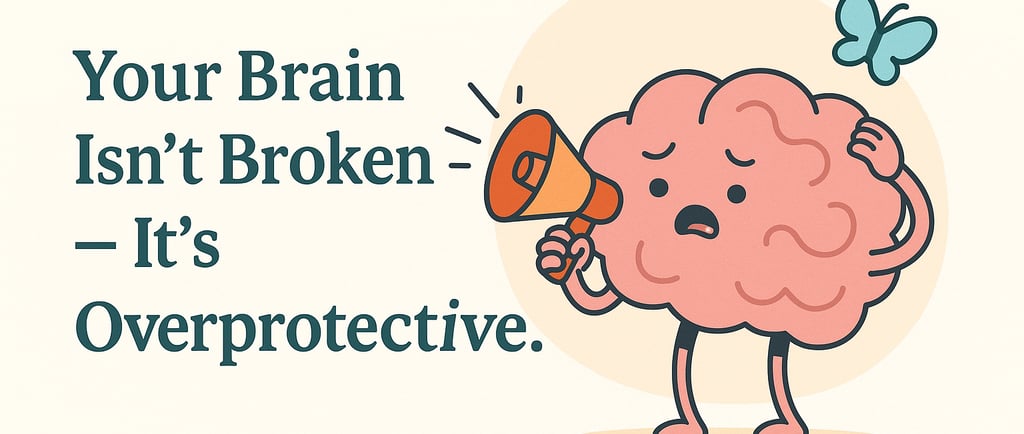
The Truth: Your Brain Is Not Broken
—It’s Overprotective
Your brain thinks it's helping by alerting you to everything.
But you can retrain it.
Your nervous system is not fixed—it's flexible.
This is called neuroplasticity, the brain’s ability to rewire over time.
With consistent habits, your brain learns to stop treating every stressor like an emergency.
7 Research-Backed Ways to Calm an Overreactive Brain
1. Lengthen your exhale (activates the parasympathetic nervous system)
Studies show that exhaling controls your relaxation response.
Try this:
Inhale 4 seconds → exhale 6 seconds
Repeat 10 times.
Your heart rate will drop within 90 seconds.
2. Label your feeling (this reduces amygdala activity!)
Neuroscientist Matthew Lieberman found that naming your emotion lowers emotional intensity.
Example:
“I feel anxious.”
“I feel overwhelmed.”
“I feel pressure.”
Your brain stops spiraling because it feels seen.
3. Change your physical environment
A small shift can interrupt an emotional spiral:
Open a window
Step outside
Move to another room
Touch something cold
Environmental cues reset your nervous system fast.
4. Do a 30-second sensory grounding check
Ask your body:
What do I see?
What do I hear?
What do I feel?
This brings your brain out of the “dangerous future” and into the present.
5. Interrupt catastrophic thoughts with ONE sentence
Tell yourself:
“Is this a threat, or just a thought?”
This instantly separates emotion from reality.
6. Use rhythm to calm your vagus nerve
Rocking, swaying, tapping, or humming activates your vagus nerve—your body’s calm controller.
Even gentle movement tells your brain:
“We’re safe now.”
7. Micro-check-ins throughout the day (MoodWiser style)
Tiny emotional check-ins keep your stress from building.
Examples:
“What am I feeling right now?”
“What do I need?”
“Is this real or imagined pressure?”
“Is this mine or someone else’s emotion?”
Your brain loves consistency, not perfection.
The Emotional Truth
Nothing is wrong with you.
Nothing is broken.
Your brain is simply reacting to a world it wasn’t designed for.
You don’t need to “fix yourself.”
You just need to understand the system running inside you.
And once you do?
You stop spiraling.
You stop panicking.
You stop treating every stressor as a danger.
You start living.
📱 Where MoodWiser Fits In
MoodWiser helps you retrain your emotional patterns through:
Gentle mood check-ins
Cozy lifestyle ideas
Thoughtful reflection prompts
Daily grounding habits
Emotional awareness tools
Your emotions aren’t your enemy —
They’re your map.
MoodWiser helps you read it.
Download the Moodwiser app today!